


Professional installation techniques for wood-laminate-spc floors
December 1, 2025
Keywords:
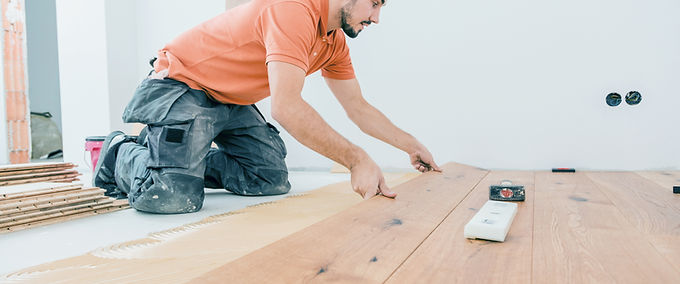
Installation techniques vary depending on the material and system chosen. Prefinished wood can be installed glued or floating, although in more technical situations, glued installation offers greater stability and acoustic comfort.
Gluing involves the use of specific adhesives, applied with a notched trowel, and requires careful distribution, pressing the planks, and adhering to the required setting times. Floating installation, on the other hand, uses interlocking systems and suitable mats, allowing for less invasive work on the subfloor.
Laminate flooring and many SPC systems almost always feature a floating installation with a mechanical click system. Accurate interlocking joints are essential to avoid micro-gaps, protruding edges, or creaking noises. The planks are typically installed along the main light or the length of the room, visually elongating the space. The design also takes into account connecting rooms, corridors, and areas where very narrow joints are best avoided.
A key element is managing expansion . All "floating" floors require a perimeter space between the floor and the wall, hidden by the skirting board or custom profiles. This space allows the floor to expand and contract according to temperature and humidity without warping. An improvised installation, which wedges the floor against walls or under rigid thresholds, can cause swelling or heaving over time.
Great attention is paid to finishing details : cuts around door frames, connections with other flooring (tile, vinyl, carpet), step and tread edges, integration with grilles, vents, and other technical elements. The use of coordinated profiles, appropriate skirting boards, and well-designed joints helps create visual continuity across the floor.
Even managing the first and last rows requires calculation: before starting installation, the distribution of the planks is simulated to avoid ending up with a final row that's too narrow or with unsightly cuts. In complex spaces with many recesses, it's best to start from well-drawn reference lines and proceed in sections, maintaining alignment.
Professional installation is recognizable over time: no unexpected lifting, no gaps that open unnecessarily, no "boat effect" when walking. The customer simply perceives a surface that "stays in place," silent and consistent, even after years of use.
Highlight
• Floating interlocking systems allow for quick, clean and often reversible installation.
• Respecting the perimeter joints allows the floor to expand without creating swelling.
• Good initial tracking avoids narrow strips in critical areas and improves the final aesthetics.
• The correct use of profiles and joints between different environments guarantees visual continuity and technical stability.
Low Light
• Interlocking or alignment errors can cause uneven joints and creaking noises that are difficult to correct.
• Laying without expansion joints on very large surfaces increases the risk of warping.
• Working on substrates that are not perfectly prepared often leads to openings between planks and noticeable movements.


